Bedding · Mattress toppers · Practical guidance
What to Know Before Choosing a Vispring Natural Mattress Topper
A natural mattress topper can change the feel of a bed without replacing the mattress beneath it. Before choosing one, consider what you want to change, how the materials may feel in your room, whether the size will fit, and what care the topper requires.
A measured guide to materials, comfort preferences and fit—so that a new layer is a considered choice, not a guess.
A small change at the surface
A mattress is not experienced as a single, isolated object. It is a layered sleep surface: the bed base supports the mattress, the mattress responds to the sleeper, and sheets, protectors and toppers shape the feel at the point of contact. A topper sits near the top of this arrangement. Its most immediate influence is usually on surface comfort—the first impression of softness, cushioning or warmth—rather than on the deeper structure of the mattress.
That distinction matters. If an existing mattress is broadly supportive but feels a little too firm, a topper may introduce a softer, more cushioned sensation. If the mattress has lost its shape, sags substantially or no longer feels stable, adding a plush layer is unlikely to correct the underlying problem. A topper can modify a bed; it cannot restore a worn-out support system.
Natural materials bring their own character to this layer. Wool, cotton, down and latex are not interchangeable, and the word “natural” does not tell you exactly how a product will feel. Construction, thickness, filling, fabric and quilting all influence the experience. For that reason, the most useful question is not simply whether a topper is natural, but whether its particular materials and design suit the bed and the person sleeping on it.
Start with the problem you want to solve
Before looking at product descriptions, spend a few nights noticing what is and is not working. Is the surface uncomfortably firm at the shoulders or hips? Does it feel warm? Are you looking for a little more cushioning, or hoping to protect the mattress from everyday wear? These are different needs, and a single topper may not address them all.
Think about comfort in practical terms. Side sleepers often notice pressure where the body meets the bed, particularly around the shoulder and hip. Back and stomach sleepers may be more sensitive to a surface that lets the body sink more than feels comfortable. These are useful observations, not rules: body shape, preferred sleeping position and personal sensation vary widely. There is no universal firmness setting that suits everyone.
Also consider whether the discomfort is consistent. If a bed feels different from one night to another, check the mattress protector, fitted sheet and bed base as well as the mattress itself. A sheet that is too tight, a protector that bunches, or an unsuitable foundation can affect the feel of the whole bed. A topper is best chosen after these simpler factors have been considered.
- For a softer first impression: Look at the topper’s fill, loft and quilting, and consider whether added cushioning is what the mattress needs.
- For a warmer or cooler feel: Compare the construction and care information, while remembering that room temperature, bedding layers and personal comfort all play a part.
- For mattress protection: Check whether the topper is designed for that purpose or whether a separate protector is more appropriate.
- For a mattress with visible sagging: Assess the mattress and base rather than expecting a topper to correct a structural problem.
What “natural” can—and cannot—tell you
Natural materials are often chosen for their feel, provenance or familiar association with traditional bedding. But the label alone is not a complete guide to performance. A topper described as wool, for instance, may combine wool with cotton, and the amount of each material, the way it is layered and the way it is held in place all affect the finished product.
Wool is used in bedding because it can form a springy, insulating layer and interact with moisture. Cotton commonly appears in covers and quilted shells, where it contributes to the textile’s hand and structure. Other fillings, including down or plant-derived fibres, create different levels of loft and softness. Natural latex is a distinct material with a more resilient feel; a latex mattress topper should not be assumed to feel like a wool-filled one simply because both are marketed around natural materials.
Materials can influence how a bed feels, but they do not determine comfort on their own. The thickness of the layer, the density and distribution of its fill, the stitching pattern and the firmness of the mattress beneath all contribute. A light topper on a very firm mattress may feel different from a deeper, loftier topper on the same bed. Even two products with similar ingredients can behave differently when their construction differs.
It is also useful to separate material claims from personal outcomes. A description of wool’s moisture-management properties does not guarantee that a sleeper will feel cool in every room or season. A natural fibre is not automatically hypoallergenic for every individual, nor does a premium material promise better sleep for every person. Treat product details as information about construction, then consider how those details relate to your own preferences and circumstances.
Considering a Vispring natural topper
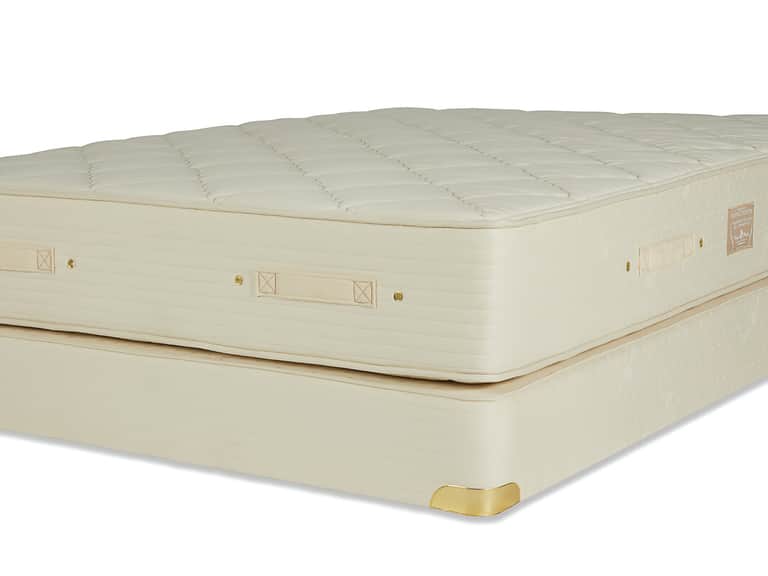
For a concrete example, the Vispring Heaven Luxury Mattress Topper is described as a blend of cotton and British wool. Its listed height is 2.8 inches, and the product details identify contrasting edging. Those specifications offer a starting point for understanding the item, but they do not tell every sleeper exactly how it will feel. Comfort remains personal, and the effect will depend partly on the mattress underneath.
Wool-filled bedding is often considered by people who want a cushioned layer with a natural-fibre composition. In this case, the stated blend makes it important to look at the complete construction rather than interpreting “British wool” as the sole material. The height also deserves attention: a topper of this depth may noticeably change the profile of the bed and how fitted bedding sits. Before deciding, check current manufacturer information for the exact size, care instructions and any details relevant to your particular mattress.
Think about the topper as part of a system. A deep mattress plus a substantial topper may require a deeper fitted sheet. A protector placed over the topper can change the feel and may affect how the layer stays in place. If the mattress has a quilted or cushioned surface already, additional loft may produce a different result than it would on a flatter, firmer mattress.
Product descriptions can help identify materials and dimensions, but they are not a substitute for a personal assessment. If possible, find out whether there is an opportunity to experience the topper in person, and clarify the retailer’s current return and care policies before purchase. Policies can vary, and a topper’s condition after use may affect whether it can be returned.
Fit begins with a tape measure
A topper should correspond to the mattress dimensions, not merely to the name of the bed. Labels such as “king” can refer to different measurements in different countries, and older or custom beds may not match a current standard size. Measure the mattress itself from side to side and head to foot. If it has rounded corners or unusual dimensions, record those details too.
Measure the mattress depth as well as its length and width. The topper’s added height can affect fitted-sheet pockets, bed skirts and the appearance of the mattress on the frame. If you use a mattress protector, check whether it is designed to fit over both mattress and topper. A protector that is too shallow may pull tight or shift; one that is much too large may wrinkle.
Consider how the topper will stay in position. Some products rely on their weight and friction, while others use elastic straps, a fitted skirt or another form of attachment. A smooth mattress cover, a restless sleeper or a particularly deep bed may make secure placement more important. Look for the actual construction details rather than assuming that every topper fits in the same way.
Bed-frame and base compatibility deserve a quick check, especially where the mattress already sits close to the headboard, footboard or side rails. Adding height can change how the bed fits within its frame. In compact London flats, where bedrooms and storage are often at a premium, practical details such as lifting the mattress to fit a topper or storing the packaging can matter as much as the material itself.
Care is part of the comfort calculation
A topper is used night after night, so care requirements are not a footnote. Before choosing one, find out whether it can be washed at home, requires specialist cleaning or should only be aired and spot-cleaned. Follow the manufacturer’s current instructions: heat, water and detergents that are suitable for one material may damage another.
Natural fillings may need careful handling to preserve their shape and feel. A topper that is difficult to clean may be less convenient for a household with children, pets or frequent spills. If routine laundering is important, compare that need with the care instructions rather than assuming that a natural product will be easy to wash. A separate, washable mattress protector may provide a more practical first barrier against everyday marks.
Regular airing can help keep bedding fresh, but avoid exposing a topper to conditions that contradict its care guidance. Do not fold or compress it for long periods unless the manufacturer says this is acceptable. When changing sheets, check whether the topper has shifted or developed uneven areas. Small habits—such as keeping the bed dry, using an appropriate protector and following cleaning directions—can help maintain the sleep surface.
Temperature, layering and the room around the bed
Sleep comfort is shaped by more than a single filling. The bedroom’s temperature, ventilation, duvet weight, nightwear and the number of bedding layers all affect how warm or cool the bed feels. A topper may contribute to the overall sensation, but it cannot be evaluated in isolation from the rest of the sleep environment.
In a small or highly insulated room, heat can build up differently than it does in a spacious, well-ventilated bedroom. Seasonal changes matter too: a layer that feels welcome during a cold spell may feel less comfortable in a warm room. If temperature is your main concern, make one change at a time. Adjusting the duvet or room ventilation alongside a new topper makes it difficult to tell which change produced the difference.
Layering also affects how the topper feels. A thick mattress protector can partially mask the texture and loft of the layer beneath. A tightly fitted sheet may compress a lofty surface. The goal is not to assemble the greatest number of layers, but to create a combination that feels stable, comfortable and manageable to care for.
A fair way to compare options
When comparing mattress topper materials, create a short list of priorities before reading promotional language. Write down the change you want, your preferred feel, any care limitations and the measurements of your bed. Then compare products using the same questions: What is the fill? What is the cover made from? How thick is the topper? How does it attach? What are the care instructions? Does the stated size match the measured mattress?
Pay attention to precise language. “Natural,” “luxury” and “comfort” are broad descriptors; a materials list and construction details are more useful for comparison. If the product page leaves something unclear—such as whether the cover is removable, how the topper is secured or what cleaning is permitted—ask the retailer or manufacturer before buying. A clear answer is more valuable than an assumption.
It may help to keep a brief comfort diary for a few nights before making a decision. Note your usual sleeping position, where you feel pressure, whether you wake warm, and whether the mattress feels uneven. This is not a medical assessment; it is a way to describe your own experience accurately. Once a topper is in use, allow time to judge its feel under ordinary conditions, while respecting any trial or return terms.
Common expectations worth revisiting
- “A topper will fix any uncomfortable mattress.” It may change surface feel, but it cannot reliably correct sagging, broken components or an unsuitable base.
- “Natural materials are always cooler.” Temperature is influenced by the whole bed and room. Fibre properties are only one part of the experience.
- “More thickness means more support.” Thickness describes depth, not necessarily the kind of support or firmness a sleeper needs.
- “A standard size will fit every bed with the same label.” Measure your mattress, especially if it is older, custom-made or from another market.
- “A high-quality topper needs no maintenance.” Every material has care requirements. Check them before buying and follow the guidance afterward.
A simple decision checklist
Before choosing a Vispring natural mattress topper—or any alternative—pause over the practical questions below. They help turn a broad search for “more comfort” into a decision grounded in the bed you already own.
- Have you identified what you want to change about the mattress?
- Is the mattress still in sound condition, without significant sagging or damage?
- Do you understand the topper’s full material composition and construction?
- Have you measured the mattress length, width and depth?
- Will your sheets and protector fit over the combined mattress-and-topper height?
- Can you maintain the topper in a way that suits your household?
- Have you checked current product, delivery, trial and return information?
The layer beneath the decision
Choosing a topper is ultimately an exercise in paying attention: to the feel of the mattress, the way the bedroom behaves through the seasons, and the small practical details that determine whether a new layer works in daily life. Natural materials can offer appealing textures and familiar qualities, but no fibre or brand can promise the same result for every sleeper.
Begin with the mattress you have, not the one described in an advertisement. Decide whether you need softness, protection or a different surface sensation. Confirm the dimensions, understand the care, and compare construction rather than relying on a single label. For the Vispring Heaven Luxury Mattress Topper, the stated cotton-and-British-wool blend and 2.8-inch height provide useful points of reference; the final question is whether those details suit your bed and preferences.
A thoughtful choice may make an existing sleep surface feel more inviting without replacing the mattress. The most successful change is often not the most complicated one, but the one that answers a clearly understood need and fits the room, the bed and the person who rests there.